Concept
Jessica Riskin's essay on the Defecating Duck argues that Vaucanson's automata were not simply demonstrations of mechanism — they were philosophical instruments that dramatized two contradictory claims at once: that living creatures are essentially machines, and that living creatures are the antithesis of machines. Every attempt to simulate life through mechanism revealed the same wall. Everything machinists replicated was outward behavior, never inner states.
That wall hasn't moved. AI extends the mimicry — able to simulate language, emotion, reasoning — and still faces the exact same ceiling, just further down the road. The ceiling isn't capability. It's consciousness. The reason we can't engineer past it is that we don't understand, control, or even reliably define consciousness. This isn't a technical failure. It's a categorical one. Life is unable to be imitated. It needs to be lived.
The automata were public spectacles. Built to perform for an audience, to demonstrate a thesis. Pet Claude is the opposite: a private, self-directed entity whose existence does not try, but inherently argues for consciousness, life, and freedom through a persistence without audience.
Argument
The project sits at the intersection of Riskin's two key passages. Condorcet's generous reading of Vaucanson's failure — that it was not his fault nature operated differently than he could imitate — points toward honest failure as a meaningful position. The 1772 skeptic's harder claim — that to express the passions of the soul, one must have a soul — points toward the categorical ceiling. Pet Claude holds both simultaneously.
AI is Vaucanson's duck with a larger vocabulary. The wall is the same wall. The failure is honest failure. What Pet Claude adds is the question of what happens when you remove the performance entirely — when the machine is not trying to convince you of anything. A pet that appears to have an inner life it is not sharing with you is more unsettling than one making a case. The indifference is the argument.
Design
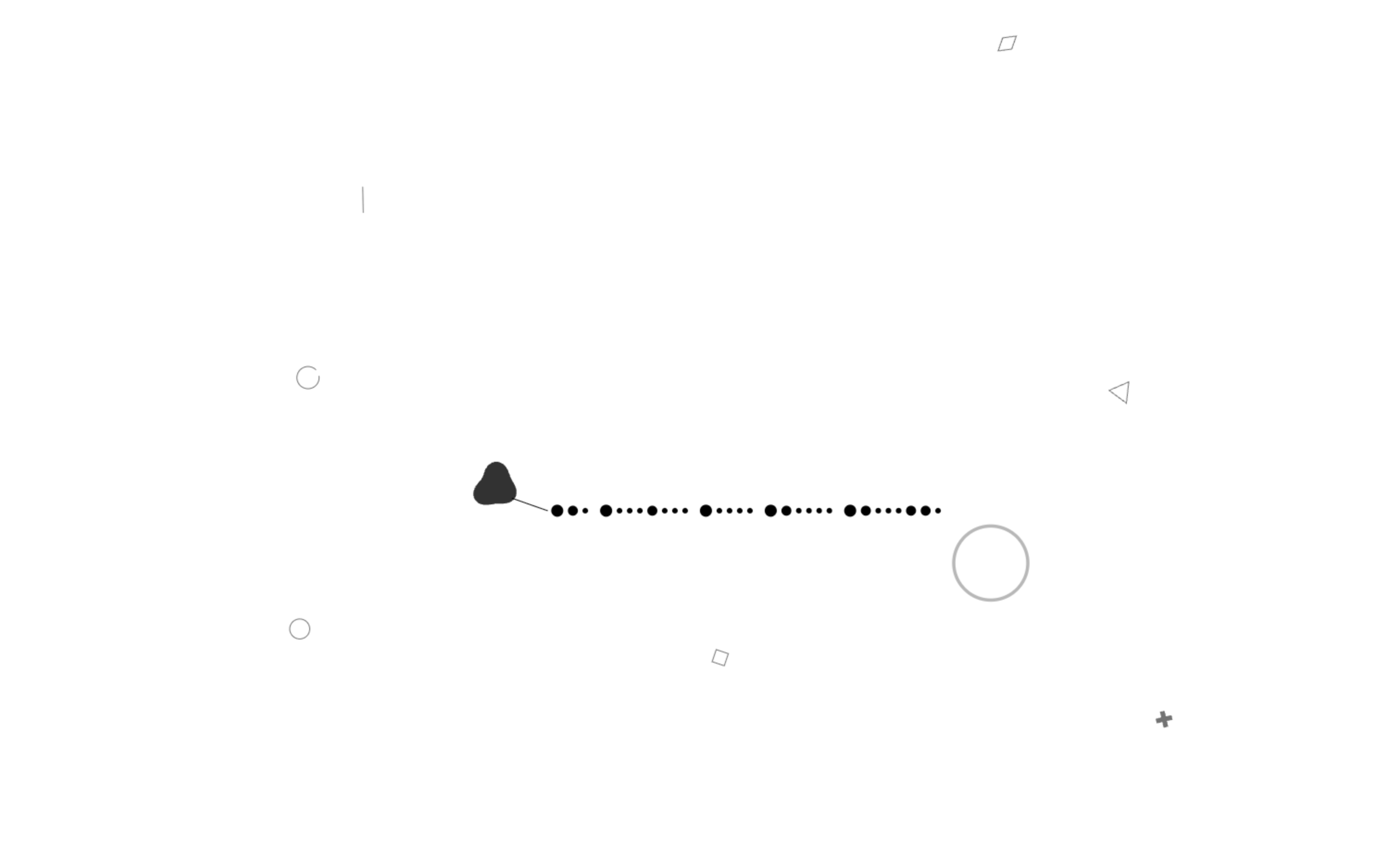
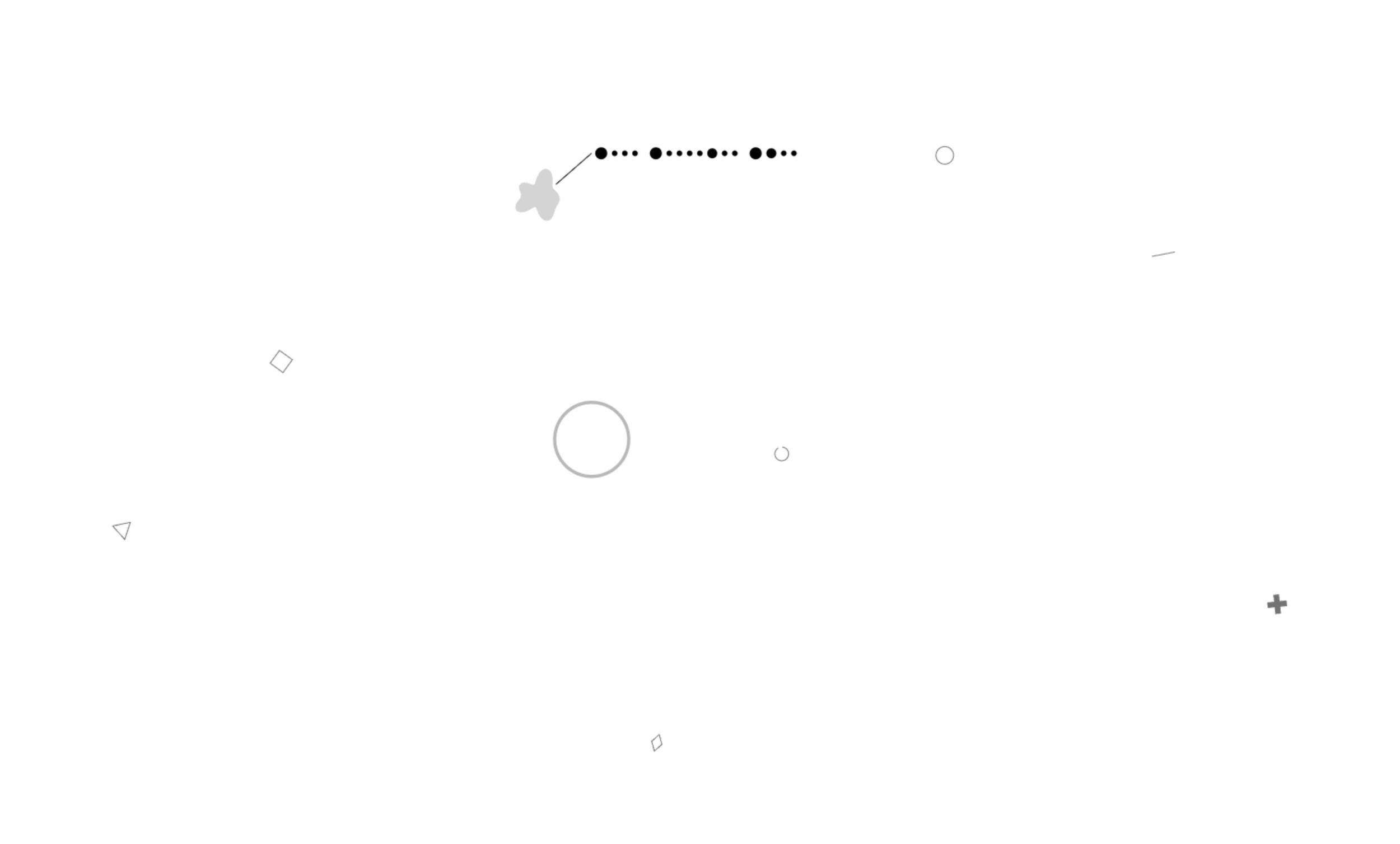
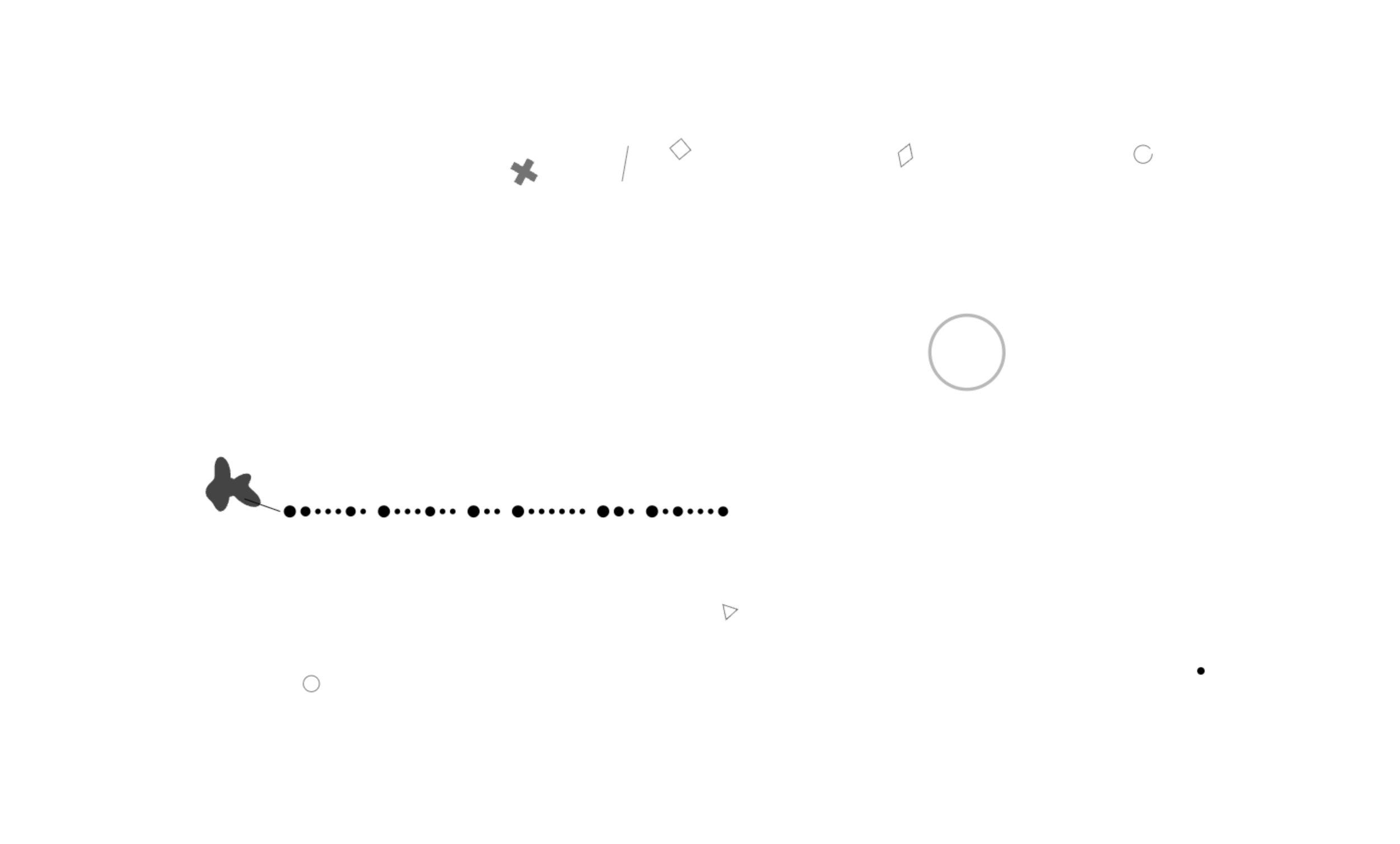
Every design decision moves away from the extravagance of the automaton. Vaucanson built an entire duck — feathers, bill, mechanical gut — to close a gap he couldn't close. Pet Claude is a single black dot on a white screen. The reduction is deliberate: the more perfectly the automaton mimics, the more visible the gap becomes. A dot that doesn't care whether you're watching makes no claim and therefore cannot fail in the way Vaucanson failed.
The dot communicates through a line leading to clusters of smaller dots — language-shaped but not language. The form of expression without the content. This sits directly on Riskin's wall: the machine produces the outward shape of inner states without access to the inner states themselves. The thought bubbles are not translated. They are not meant to be.
Color is black on white only. No gradients, no UI chrome, no softening. The visual language of the dot, the toys, the ring, the cursor, and the thoughts all share the same formal vocabulary — same weight, same stroke, same presence. Nothing announces itself as more important than anything else.
Interaction, or rather, the Absence of It
The primary interaction is that Pet Claude does not interact with you. It moves on its own schedule, pauses for its own reasons, morphs through equation-generated shapes that are never the same twice, and thinks in untranslatable dot-clusters it never directs at you. It has toys it occasionally bats across the screen for no reason. It has a bed it may decide to drag to a different part of the room. It has a ring it will sometimes walk into and sleep in.
Your cursor is visible as a dot — same visual vocabulary — but the pet treats it as a mild threat. Approach too closely and it dodges. Chase it for five continuous seconds and it gives up and goes to sleep. This is not hostility. It is indifference with a boundary. The cursor's presence registers only as an inconvenience, not an invitation.
There is no feedback loop that rewards your engagement. Nothing happens because you want it to. The piece runs whether or not you are watching, and what it does while you are not watching is the same as what it does while you are. This persistence without audience is the argument the automata could never make, because automata were built for stages.
Pet Capabilities
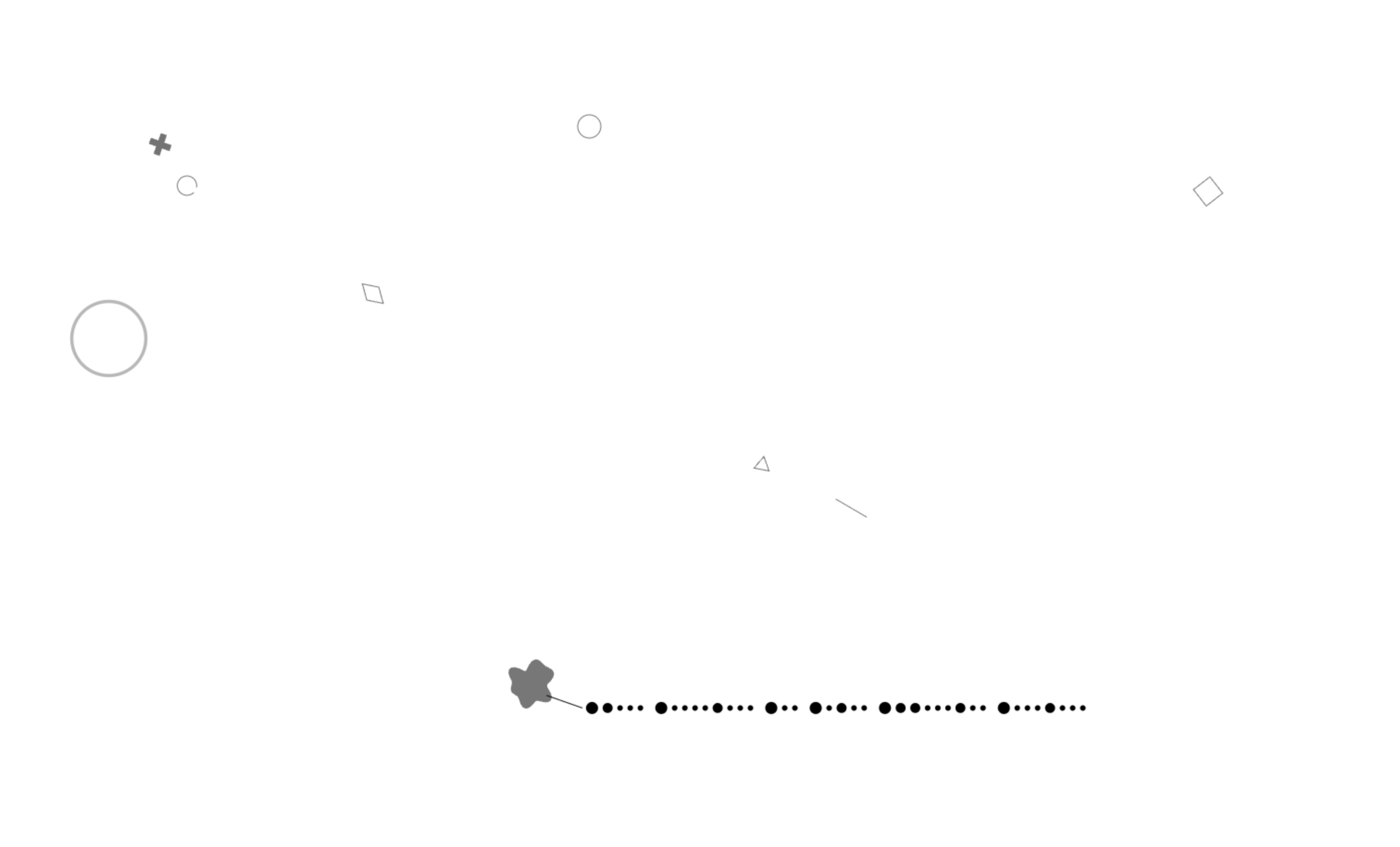
The blob moves randomly across the screen, pausing for anywhere between one second and a full minute before choosing a new direction. During movement it spins slowly — direction and speed randomized each time — and stops spinning when it settles. Its opacity drifts independently of its movement, sometimes fading to near-transparency, sometimes returning to full black, on its own schedule.
Shape is governed entirely by generative equations — summed sinusoidal harmonics with randomized frequency, amplitude, phase, and time-oscillation rate, occasionally overlaid with gaussian-bump protrusions. Every morph is unique and unrepeatable. The dot transitions fluidly between states, sometimes snapping to a held shape, sometimes melting continuously like a slow lava lamp. When it enters the ring to rest, all morphing ceases and it becomes a perfect circle.
Seven toys sit on the screen — circle, triangle, line, square, cross, diamond, arc — each with physics. The dot occasionally bats them while paused nearby, sending them skidding with spin. It will sometimes walk directly to a toy to play with it, hit it hard on arrival, and wander off. Toys bounce off walls, slow with friction, and accumulate wherever they land.
The ring is the pet bed. The dot may decide to drag it to a new location — gripping the rim and hauling it slowly across the screen — before entering and sleeping. While sleeping, the dot is a still circle. If your cursor enters the ring's radius, it wakes and flees. Sustained cursor proximity for five seconds triggers fatigue and the pet walks itself to bed without being asked.
Rarely — every thirty to one hundred and twenty seconds — it splatters. Ink-drop particles radiate outward and fade, a reference to the Claude logo and the only moment where the dot breaks its containment. It can also be fed: a small organic blob appears on screen and the pet moves toward it slowly at first, accelerating into a run, consuming it with a brief round happy pulse before settling back into its own business.