AI Data Center (Schneider Electric) by Sam Mao
Digital Animation
The animation consists of 720 digital frames rendered at 15fps, and was created for Schneider Electric for executive-level presentation and strategic product positioning. It will also be used as promotional material for an upcoming product launch.
Conceived and developed over the course of one month, with each frame individually illustrated over six days of production.
During the process, 3D techniques in Blender were explored, but the final piece remained committed to a hand-drawn aesthetic, emphasizing organic line work and fluid motion.
Storyboard Version 1
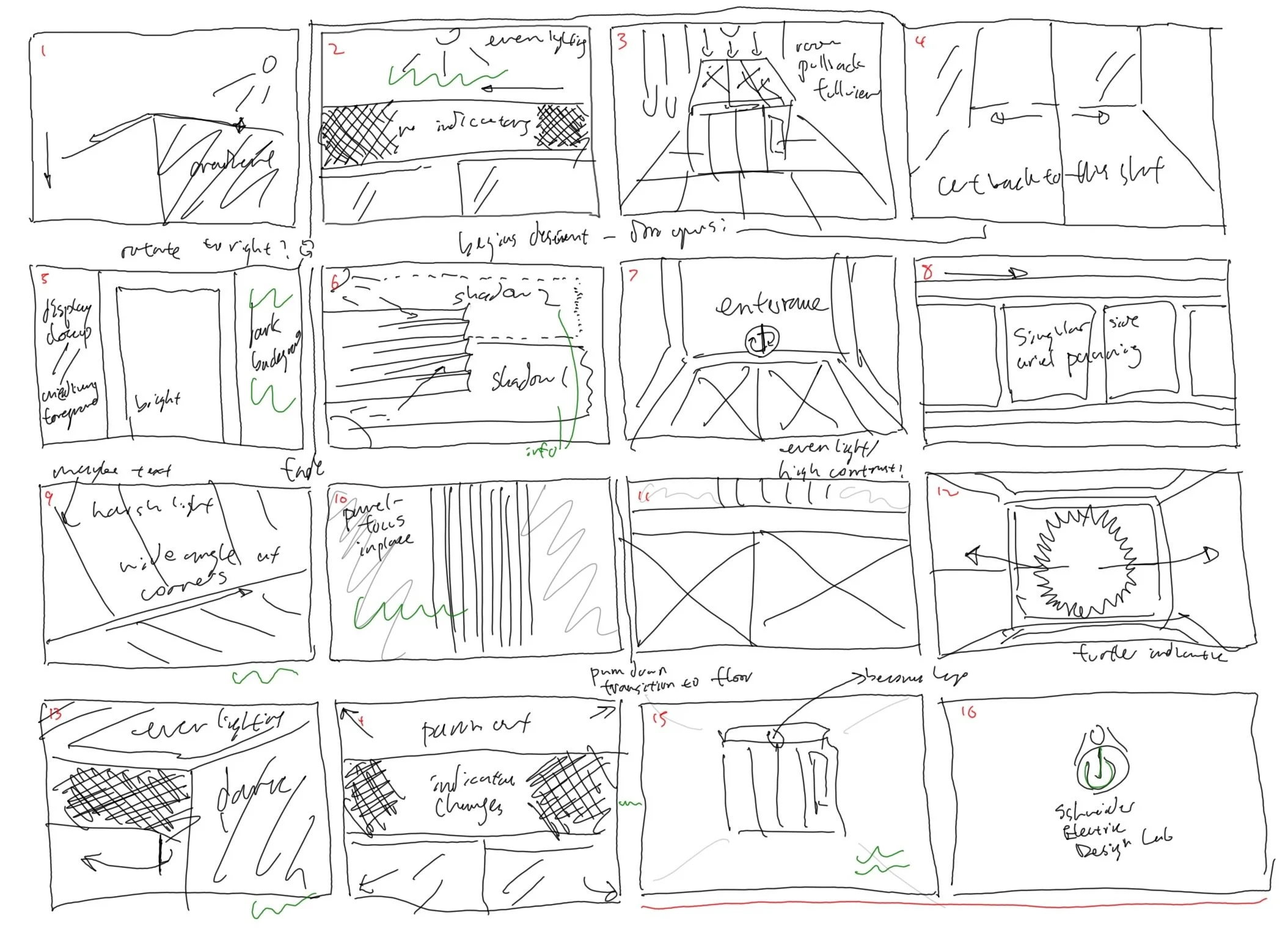
Storyboard Version 1 - The first storyboard iteration focused on mapping out the essential story beats and establishing the overall flow of the animation. As visible throughout, I was very focused on the lighting and the “reveals” of the product, as at this point I wasn’t fully sure with the final stylization of the animation. Each panel represents a key moment in the narrative, with rough sketches that prioritize composition and pacing over detailed rendering. I explored different camera angles and transitions, experimenting with how scenes would connect and build upon each other. I write notes for myself throughout the margins regarding ideas about lighting, camera movement, and environmental details that would become crucial elements in the final animation. This version served as a testing ground for narrative coherence, allowing me to identify potential pacing issues and areas where the story needed strengthening.
Storyboard Version 2
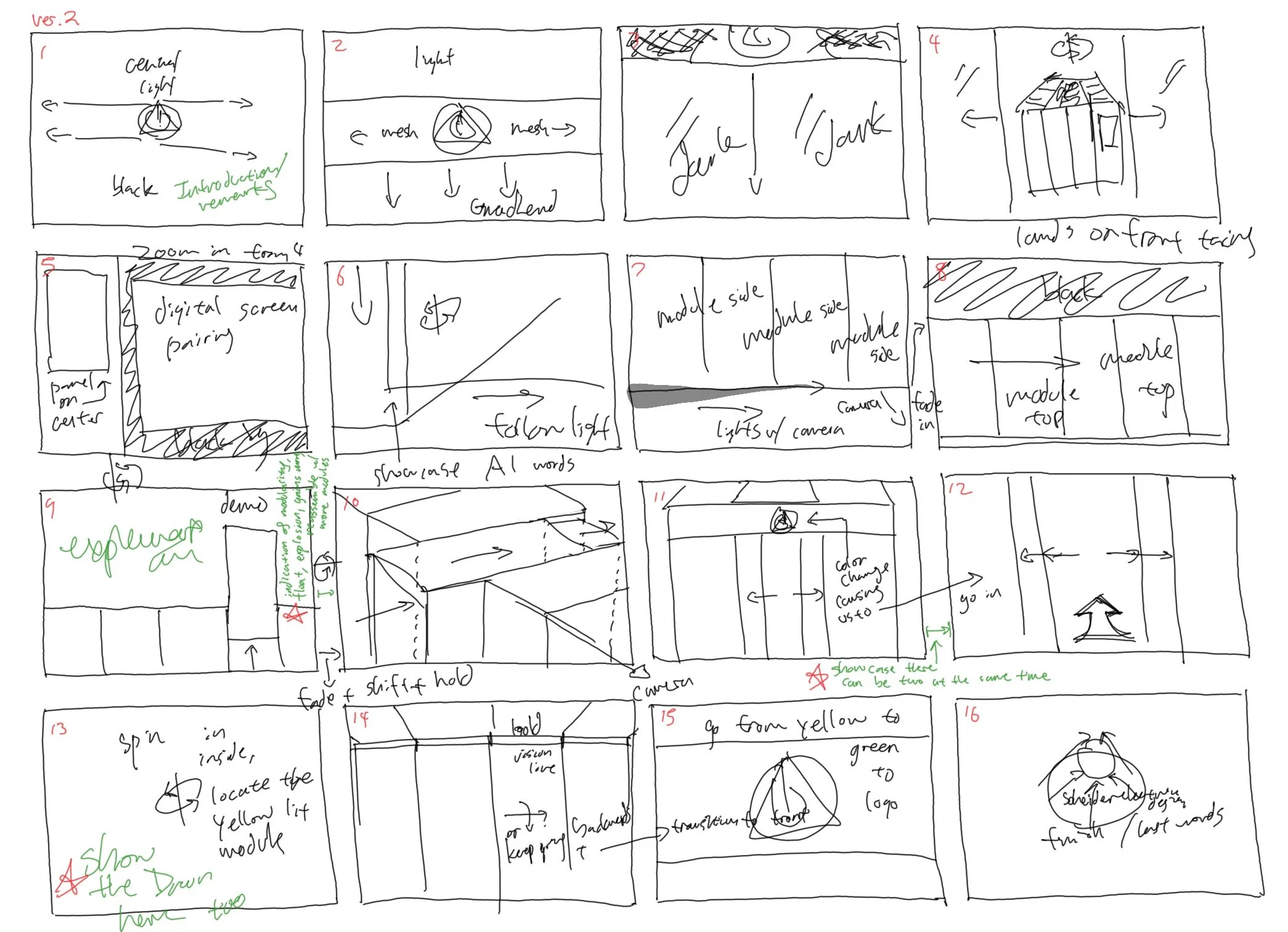
Storyboard Version 2 - The second storyboard represents a more technically-minded approach, incorporating lessons learned from the first iteration, as well as feedback from my superior regarding product display and function showcase. Here, I focused on refining camera movements, establishing clearer visual hierarchies, finding ways to showcase selling points and product differentiators, and working out specific technical challenges that would arise during production and transition. Though the storyboard only serves to communicate my idea to another for prefacing, I still decided to render each frame in a manner reflective of the pacing and structure, including scenes with multiple elements, planned transition effects, and consistent visual motifs throughout.